You’ve optimized your procurement process. Your spec team has built every asset to the job. You’ve planned your maintenance schedules. So why does the cost per mile keep creeping up?
Fleet management has long been divided into lanes: someone specs the equipment, someone different handles upfit, and someone else manages parts and service. Everyone does their job well, but their decisions are made in isolation, without visibility into how they affect each other, the economics quietly working against each other.
According to heavydutyjournal.com, acquisition costs represent 20%–30% of a fleet’s total cost over a five-year period. That means 70%–80% of what a fleet spends actually goes into operational and maintenance expenses. The decisions that drive those post-acquisition costs, including how the equipment is spec'd, how it's upfitted for the job, and which replacement parts go into it, are made without seeing the full picture.
The common move is to optimize for immediate cost. Most fleets work this way, in silos. But the smartest and most efficient fleets don’t treat OEM, upfit, and parts replacement as separate decisions. Instead, they treat them as one connected lifecycle strategy, each decision made with the full working life of the asset in mind.
The lifecycle lens: Why integration matters
To understand why siloed decisions are so costly, let’s look at the lifetime of a working asset. Most fleet managers know the four stages of fleet lifecycle management: acquisition, when equipment is selected and spec’d for the job; operation, when assets are put to work in real-world conditions; maintenance, when equipment performs through service and parts; and replacement, when the fleet decides whether to repair, rebuild, or retire the asset. What’s less recognized is just how connected these stages are to each other and how much the decisions made in the acquisition phase shape the cost of every stage that follows.
The acquisition phase is the most critical decision point in an asset’s working life. How an asset is spec’d, configured, and matched to its application impacts every maintenance interval, repair event, and replacement decision that comes after. That means every asset spec’d without consideration of its operating environment underperforms from the start, that cost accumulating over time in ways that rarely trace back to the original spec decision.
Push the spec too far in either direction and you pay for it, says automotive-fleet.com. Over-spec’d equipment carries an unnecessary upfront cost and fuel inefficiency. Under-spec’d equipment gets overloaded in the field, so it wears out faster and drives up unplanned maintenance spend. Neither outcome is obvious at the point of purchase, but both are paid for over the asset’s life.
Most fleets ask about the upfront cost, but they should be asking what each decision will cost over the life of the asset. A truck body isn’t just purchased—it’s engineered for its full working life.
Pillar 1: OEM — Starting with the right foundation
Every asset in a fleet starts as a spec on paper. The OEM decision around what equipment gets built, to what standard, and engineered for what application is where that spec becomes real. This foundation determines how predictably and how cost-effectively the asset performs over its working life.
OEM equipment is purpose-built for a specific application, tested to performance standards, and designed with a precision that non-OEM parts can’t reliably replicate. A part or component engineered for its exact application performs as it’s expected to, holding up under the actual conditions the asset was designed for.
That distinction between a universal fit and a precise fit especially matters at scale. For a fleet with dozens or hundreds of assets, predictability in how the equipment performs and wears is operationally valuable. OEM is about predictability and consistency, helping fleets plan better for maintenance and downtime.
Starting with the right OEM foundation is not about spending more. It's about introducing predictability into the lifecycle from day one. When the foundation is right, everything built on top of it becomes more manageable. When it isn't, the gaps tend to widen over time, and everything built on top becomes more expensive.
Pillar 2: Upfit — Aligning the asset to the work
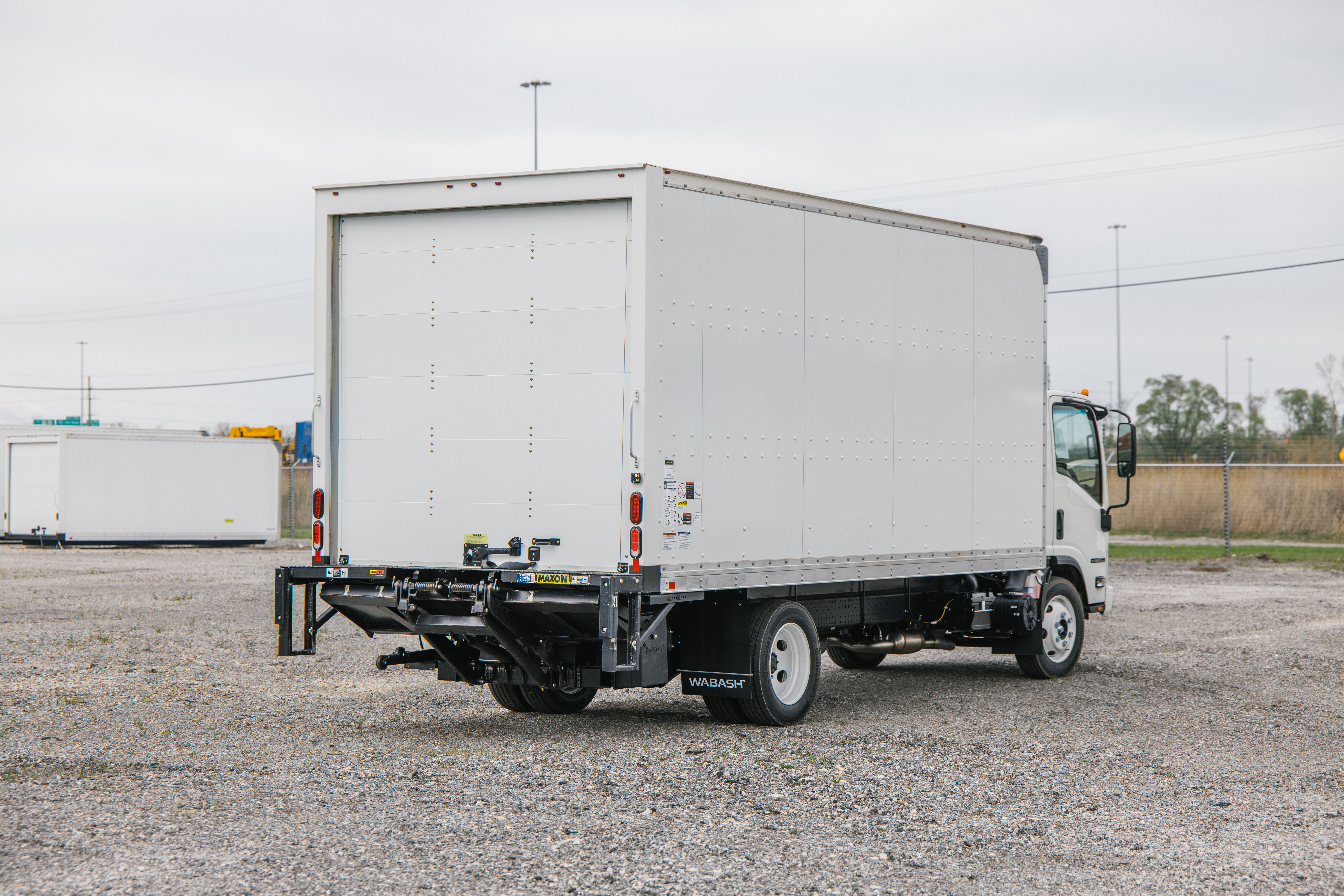
If the OEM decision sets the foundation, upfit is where that foundation gets put to work. It’s where your ROI is won or lost. Upfit is often treated as an add-on decision made post-purchase, when it’s a core part of the economic case for the asset from the start. A vehicle purpose-built for its workload runs at the right capacity, which reduces wear. It’s more efficient and therefore stays productive longer. Together, extending its usable life.
An optimized vehicle delivers the lowest cost of ownership over its working life. One that isn’t carries those costs forward for the rest of its working life.
Too often, upfit decisions are treated as a separate, secondary purchase determined after acquisition, but upfit directly determines how well an asset is matched to its work, it has a significant impact on wear rates, operating efficiency, and ultimately total cost of ownership. Treating it as an afterthought rather than part of an integrated equipment strategy is a siloed decision to challenge.
Get it wrong in either direction and the costs follow. Payload mismatches lead to premature failures. The wrong body type creates daily operational inefficiencies. When vehicles are spec'd light to save money at acquisition, those savings tend to surface later as higher operating costs, covering more frequent breakdowns, accelerated wear, and service interruptions that could have been avoided with the right configuration from the start. Over-engineer the upfit, and you introduce complexity that pushes the asset beyond what it was built to handle.
Upfit is not just customization, it's operational optimization.
Pillar 3: Parts — Sustaining performance over time
Parts and maintenance decisions don't carry the same visibility as an equipment purchase. They happen incrementally, across hundreds of service events over the life of an asset and can be a significant portion of total cost of ownership.
Repair and maintenance costs have consistently gone up in the last few years. According to the American Transportation Research Institute’s 2024 Analysis of the Operational Costs of Trucking, repair and maintenance costs rose 3.1% in 2023 to $0.202 per mile and heavyvehicleinspection.com says they now represent 9% of a fleet’s total operating expenses. Those numbers compound quickly across an entire fleet and lifecycle.
The OEM versus aftermarket decision sits at the center of most parts strategies. Aftermarket parts are more widely available at a lower upfront cost, but they’re built for a wide range of vehicle models rather than a specific one, which can introduce risk across the service life of the component. For structural components, systems under sustained load, or anything that affects uptime, the tradeoff comes at a price. A part built to the original equipment specification offers better fit, more predictable performance, and potentially longer service life under the conditions the asset was designed to operate in.
Parts choices also directly influence two of the most consequential cost drivers in any fleet: downtime frequency and repair cycles. When a part fails or introduces a fit issue, the cost goes beyond just the replacement to also include the unplanned labor, the vehicle out of service, and the schedule disruption that follows. That same heavyvehicleinspection.com article says reactive repairs can cost up to nine times more than planned maintenance, and unplanned downtime runs $448 to $760 per vehicle per day in lost productivity.
A parts strategy that's disconnected from the equipment it's supporting shows up where it matters most: more downtime, more frequent repair events, and a higher cost per mile over the life of the asset. The cheapest part is rarely the lowest-cost decision.
The cost reality: Total cost of ownership
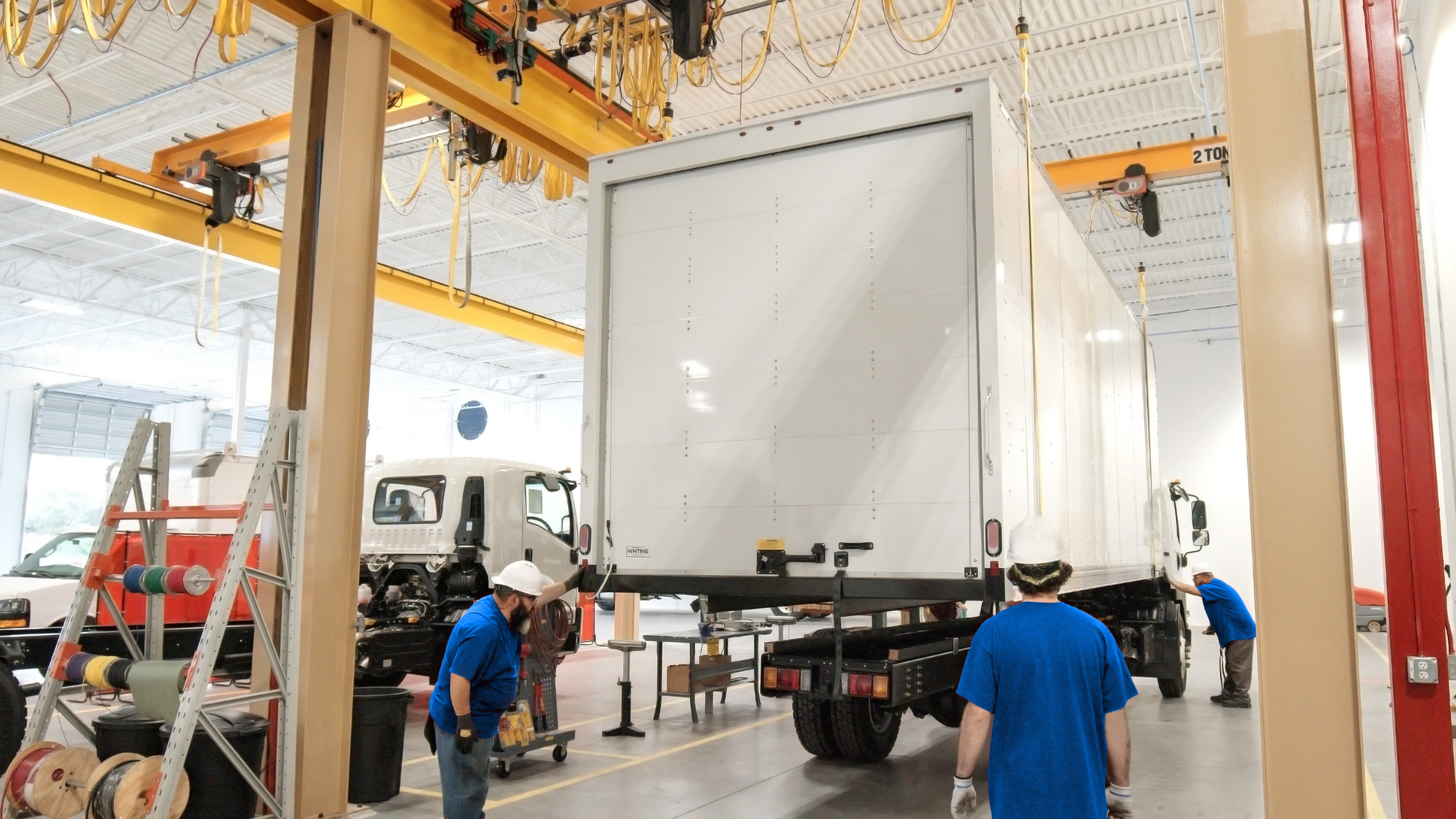
Total cost of ownership (TCO) is the financial lens that makes the lifecycle argument concrete. Every dollar spent on maintenance, every hour of downtime, every fuel efficiency gap created by a mismatched spec, all of it flows into the total cost of operating an asset from acquisition to retirement.
Cost shifts over the lifecycle. Early on, the main expense is depreciation. As the asset ages, repair frequency and downtime start to rise. Fleets that don’t account for this shift end up holding assets longer than the economics justify, absorbing cost spikes that erode the savings they thought they were capturing.
An integrated equipment strategy, where OEM, upfit, and parts decisions are connected from the start, works directly against those spikes. When the equipment is purpose-built, matched precisely to its application, and maintained with parts that fit and perform as designed, costs are more predictable and lower in aggregate. You have fewer failures, less downtime, and better resale value at the end of the asset's working life. When any one of those three strategy pieces is misaligned, the others absorb the cost.
That’s the TCO case for treating these decisions as a system rather than a series of independent line items.
Where fleet strategy tends to break down
OEM selection often gets treated as a one-time procurement decision, made but then disconnected from everything that follows. Upfit is approached as an afterthought, figured out after the equipment is already ordered than designed alongside it. Parts are often purely price-driven.
Where many fleets go wrong is making these decisions in isolation. Equipment, upfit, and parts each owned by different stakeholders, evaluated on different criteria, and purchased through different suppliers and processes.
The result is a fleet that’s optimized in pieces, not as a whole. Fragmented decisions compound into higher long-term cost because no one was accountable for how they fit together.
The smarter approach: A connected strategy
The smarter approach starts with a reframe: that spec, upfit, maintenance, and replacement shouldn’t happen in silos. The most strategic fleets treat them as a connected loop from the beginning, with each decision informing the next. They start with aligning spec and upfit to the real-world application before placing the order, not once the asset arrives.
From there, the more strategic fleets evaluate their decisions across the full lifecycle, thinking in cost per mile rather than cost per part or purchase price. They use data to guide what gets standardized, reducing variability where it drives up maintenance costs, downtime, and parts complexity. Standardizing removes the friction that fragmented, one-off decisions introduce over time.
Ultimately, the connected approach is treating spec, upfit, and maintenance as one system rather than three separate choices made by separate teams, requiring a partner that manages and aligns the whole lifecycle from the start.
Wabash supports fleets as a single, connected system
Having alignment across OEM equipment, upfit expertise, and parts solutions is critical and where a fleet’s chosen partner matters. Most fleets today manage multiple partners across their equipment lifecycle. Each vendor optimizes for their piece, but no one is accountable for how those pieces fit together.
That’s the gap Wabash is positioned to close. Wabash supports fleets across equipment, upfit solutions, and a parts and service network—not as three separate offerings but as a single, connected system. The equipment, upfit, and parts are designed to work together from the start, which means the decisions that drive lifecycle performance aren't being made independently by fragmented vendors. They're being made in alignment, by one partner with visibility across the whole.
It's not about choosing components. It's about choosing a system that works together and a partner that can connect those decisions across the life of a fleet. Smarter fleets don't just buy trucks. They build strategies.
Learn more about Wabash truck bodies.